Summer Road Trips with Your Dog: An Aussie Checklist
Summer holidays are better with your dog. This checklist covers everything from car safety and heat to ticks and pet-friendly stays.
The great Australian summer road trip is even better with a dog in the back seat. Long drives, hot days and new places bring a few extra risks, though. Here is a practical checklist to plan a safe, relaxed trip.
Before you go
- Vet check: make sure vaccinations are up to date, especially if your dog will stay in a boarding kennel or meet lots of other dogs.
- Parasite prevention: heading to the east coast? Make sure your dog is protected against paralysis ticks. Travelling north? Ask your vet about brown dog ticks.
- Microchip and ID: check your microchip details are current and add a tag with your mobile number.
- Pet-friendly bookings: confirm accommodation, campgrounds and beaches allow dogs before you go. Many national parks do not.
- Find vets on your route: save the numbers of vets and emergency vets near where you will be staying.
Car safety
- Restrain your dog with a crash-tested harness and seatbelt attachment, a secured crate or a cargo barrier. Road rules across Australia prohibit driving with a pet on your lap, and unrestrained pets can lead to fines.
- Keep heads inside the car. Dogs hanging out of windows can be injured by debris.
- Never let dogs ride loose in a ute tray. They must be restrained, and the tray should be shaded and not too hot to sit on.
Beating the heat on the road
- Drive in the early morning and evening where you can.
- Run the air-conditioning and use sun shades on rear windows.
- Lay a cooling mat on the back seat or in the crate.
- Stop every two hours for water, a toilet break and a short walk in the shade.
- Never leave your dog in the car, even for a quick stop for fuel or food. Plan stops where your dog can come with you, or travel with someone who can stay with them outside in the shade.
Car sickness
Some dogs get car sick, especially puppies. Feed a light meal a few hours before you leave rather than right before, keep the car cool and well ventilated, and take regular breaks. If your dog is regularly sick on drives, ask your vet about options before your trip.
What to pack
- Food for the trip plus a few extra days
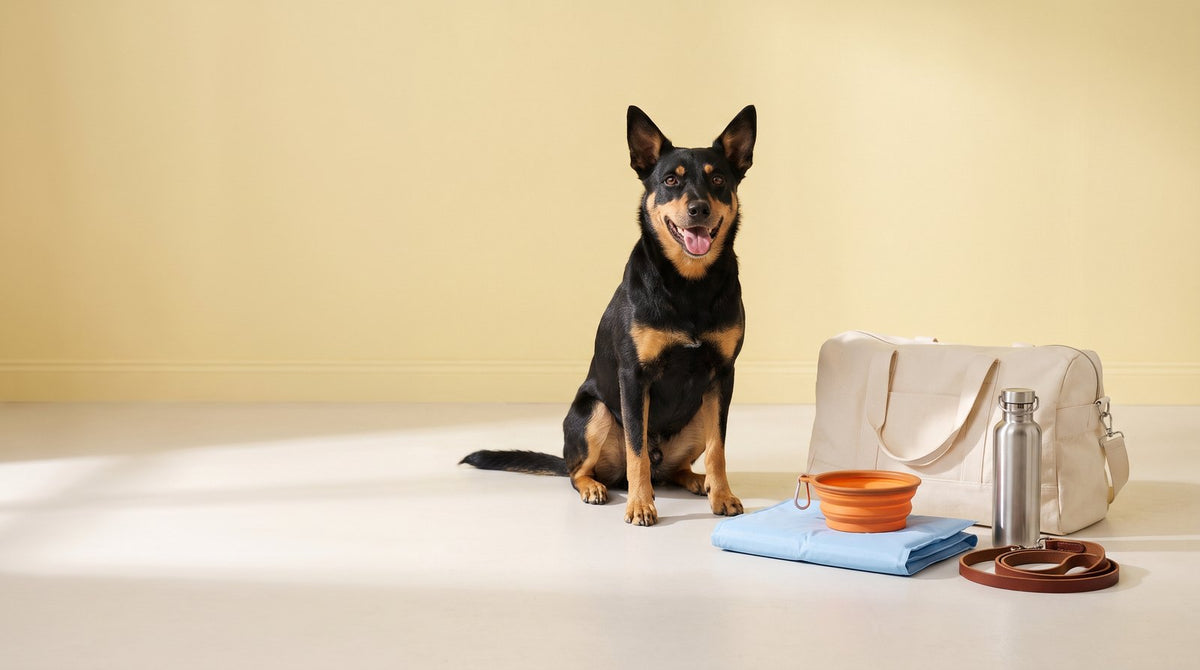
- Plenty of water and a collapsible bowl
- Lead, harness and spare collar with ID tag
- Bedding and a familiar toy
- A cooling mat
- Poo bags
- Any medications, plus a copy of vaccination records
- A tick remover tool and small first aid kit
- Towels for wet or sandy dogs
- A recent photo of your dog, in case they get lost
At your destination
- Check the yard or campsite for gaps in fences before letting your dog off lead.
- Keep to your dog's usual feeding and walking routine as much as you can.
- Walk early and late, and do a daily tick check, especially in coastal and bush areas.
- Watch out for snakes, toxic cane toads in northern Australia, and blue-green algae in still water.
- Bring fresh drinking water to the beach, as dogs that drink sea water can become unwell.
Staying calm in new places
New sounds, smells and storms can unsettle some dogs. Bring their bed and a familiar blanket, set up a quiet corner as their safe space, and keep routines predictable. If your dog is anxious about storms or fireworks over the holidays, our guide to helping a scared dog has a step-by-step plan.
Camping with your dog
- Check the campground allows dogs and what the rules are about leads and quiet hours.
- Set up shade over your dog's spot before anything else, as sites can get very hot.
- Keep your dog on a lead or tether that cannot tangle, and never leave them tied up alone.
- Store food securely so it does not attract wildlife.
- Bring a cooling mat and bedding so they have a familiar place to rest.
- Check for ticks every evening.
A sample day on the road
- 6 am: walk and light breakfast, then load up the car.
- 7 to 11 am: drive, with a stop every two hours for water and a stretch in the shade.
- Midday: rest somewhere cool, such as pet-friendly accommodation or a shaded picnic spot with water.
- Late afternoon: a short drive if needed, then a walk once the ground cools.
- Evening: dinner, tick check, and settling in to their bed.
If your dog gets lost while travelling
- Search the area straight away and ask locals and campground staff to keep an eye out.
- Call local councils, pounds, vets and animal shelters, and give them your dog's microchip number.
- Post a clear photo in local community and lost-pet groups.
- Leave an item with your scent where your dog was last seen.
- Make sure your microchip details include your mobile number so you can be reached on the road.
A tag with your mobile number on your dog's collar is the fastest way for someone to contact you while you are away from home.
Frequently asked questions
How often should I stop on a long drive?
About every two hours, or more often on hot days, for water, a short walk and a toilet break.
Can I leave my dog in the car with the air-conditioning on?
It is not recommended. Engines can stall and air-conditioning can fail. Take your dog with you or have someone stay with them.
Is it safe to take my dog to the beach in summer?
Yes, at dog-friendly beaches in the cooler parts of the day. Bring fresh water and shade, and watch for hot sand.
This guide is general information, not veterinary advice. If you're worried about your pet's health, please contact your vet.