Dog Scared of Storms or New Year's Eve Fireworks? A Calm Plan That Works
Summer storms and New Year's Eve fireworks are stressful for many dogs. Here is a practical plan for before, during and after.
Summer in Australia brings thunderstorms, and the year ends with fireworks. For noise-sensitive dogs, both can be frightening, and more pets go missing around New Year's Eve than at almost any other time. A little preparation makes a big difference.
Signs your dog is anxious
- Panting, pacing or trembling
- Hiding, clinging to you, or trying to escape
- Whining or barking
- Drooling, yawning or lip licking
- Toileting inside or destructive behaviour
Weeks before: prepare
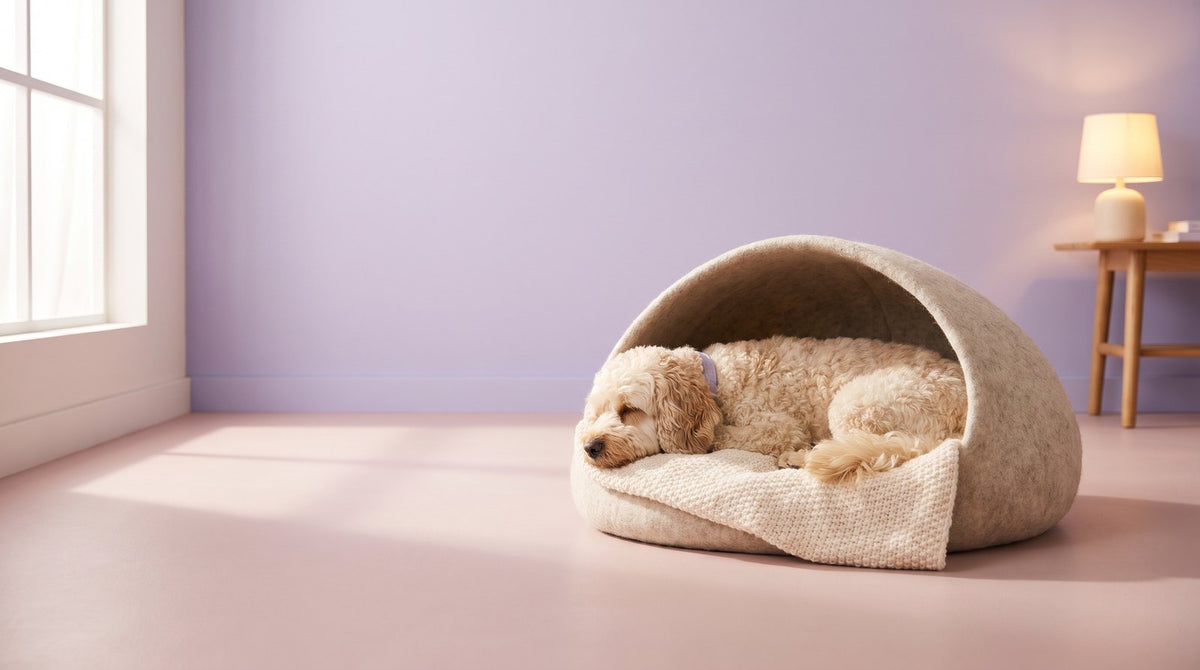
- Create a safe den. Choose a quiet interior room or a covered crate with familiar bedding. Let your dog use it freely all year so it feels safe, not like a punishment.
- Try gradual noise training. Play recordings of storms or fireworks at a very low volume during meals and play, raising the volume slowly over weeks. Stop if your dog seems worried.
- Check ID. Make sure your dog is microchipped, your contact details are current, and their collar tag is legible.
- Talk to your vet if your dog has a strong fear response. Vets can recommend behaviour plans and, where appropriate, medication.
On the night
- Walk early, well before dark and before any fireworks start.
- Keep your dog inside with doors, windows and gates secured.
- Close curtains and switch on the TV, music or a fan to soften the noise.
- Stay home if you can. Your calm presence helps.
- Comfort them if they come to you. Reassuring a frightened dog does not reinforce fear.
- Offer something to do, such as a long-lasting chew or a stuffed food toy.
- Never punish fearful behaviour.
Calming aids
Some owners use calming collars or pendants with gentle botanicals and pheromone-style blends as part of their routine. They can work well alongside a safe space and training, though results vary from dog to dog. Starting a few days before a known event, such as New Year's Eve, gives your dog time to get used to it. See our calming collar and calming pendant.
Calming aids are not a substitute for veterinary care for dogs with severe anxiety.
Afterwards
- Check the yard for firework debris before letting your dog out.
- Keep routines normal for a few days.
- If your dog gets lost, contact local councils, vets and shelters straight away, and post in local lost-pet groups.
Why some dogs fear loud noises
Dogs hear a much wider range of sounds than we do, and sudden, unpredictable bangs can trigger a strong fear response. Genetics, early experiences and past frightening events all play a part. Some dogs become more sensitive with age. Fear of noises is common and is not a sign of a badly behaved dog.
Storm-specific tips
Storms bring more than noise: changes in air pressure, wind, flashes of lightning and even static electricity in the coat. Many noise-sensitive dogs start to show signs before the storm arrives.
- Watch the forecast in storm season and get your dog inside early.
- Close curtains to block the flashes.
- Some dogs settle in interior rooms such as a bathroom or laundry, where the noise and pressure changes are muffled.
- A snug-fitting anxiety wrap or T-shirt helps some dogs feel more secure.
A New Year's Eve plan
- A few days before: check the microchip and tag, test the safe den, and start any calming aids you use.
- NYE afternoon: a longer walk to tire your dog out, then dinner a little earlier than usual.
- From dusk: doors and gates locked, curtains closed, music or TV on, chews ready.
- At midnight: stay calm and close by. Let your dog choose where they feel safe.
- 1 January: check the yard for debris and keep the day quiet.
What not to do
- Do not give human medications or sedatives. Some are dangerous for dogs, and others do not reduce fear. Ask your vet.
- Do not tie your dog up outside.
- Do not force your dog out of their hiding spot.
- Do not leave the house gate unlocked for guests coming and going.
Multi-pet households and cats
Fear can be contagious, and a frightened dog may unsettle a calmer one. Give each pet their own safe space. Cats are also often scared of fireworks and storms: keep them inside, give them high hiding spots and boxes, and make sure windows are secure.
Building confidence all year round
The best time to work on noise fear is when there are no storms or fireworks. Short, positive sessions help your dog learn that sounds predict good things:
- Find a recording of the sound that worries your dog.
- Play it so quietly that your dog notices but does not react.
- Pair it with something great: a favourite treat, a game or dinner.
- Over many sessions, increase the volume a tiny bit at a time.
- If your dog shows any sign of worry, go back a step.
This process is called desensitisation and counter-conditioning. For dogs with strong fears, a vet or qualified behaviourist can design a plan.
When to see your vet
Talk to your vet if your dog's fear is getting worse, if they hurt themselves trying to escape, if they cannot settle for hours after a storm, or if the fear is affecting their everyday life. Noise phobia is a recognised condition, and vets have effective options, including behaviour plans and, where appropriate, medication.
If your dog goes missing
- Search your street and local parks straight away, calling calmly.
- Contact your local council pound, nearby vets and animal shelters.
- Post in local lost-pet and community groups with a clear photo.
- Check that your microchip details are current with the registry.
- Leave a familiar item with your scent at your front door.
Keep reading
Frequently asked questions
Should I take my dog to see the fireworks?
No. Even dogs who seem relaxed can panic at close-range fireworks. Leave them safely at home.
Can puppies learn not to fear noises?
Yes. Gentle, positive exposure to everyday sounds during puppyhood helps build confidence.
Do anxiety wraps work?
Some dogs find gentle, constant pressure calming, much like swaddling. Results vary, so try it on a quiet day first.
How early should I start a calming collar before New Year's Eve?
A few days before is a good idea, so your dog is used to wearing it and the scent has time to settle.
This guide is general information, not veterinary advice. If you're worried about your pet's health, please contact your vet.