Leaving Your Cat Home Alone Over Christmas: A Summer Checklist
Going away over the Christmas holidays? A practical checklist to keep your cat safe, fed and hydrated in the summer heat.
In Australia, Christmas means summer holidays, and that often means leaving the cat at home. Cats generally cope better in their own territory than in a cattery, but hot weather adds real risks. This checklist will help you plan.
How long can you leave a cat alone?
A healthy adult cat can manage a short absence, but most vets recommend that someone checks on your cat at least once every 24 hours, and more often in hot weather. Kittens, senior cats and cats with health conditions need more frequent care. For anything longer than a night, organise a pet sitter, a friend or a neighbour.
Water: plan for more than you think
- Leave water in at least two or three places in case one is knocked over.
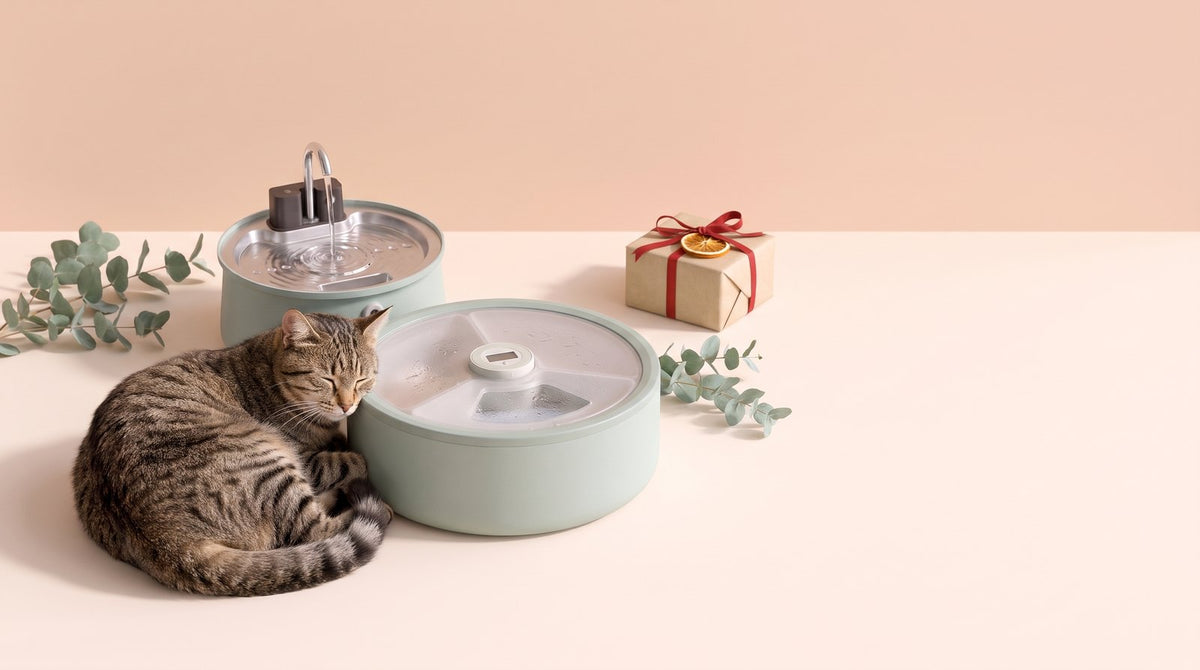
- Use a fountain to keep water moving and fresh. A cordless fountain keeps working even if the power drops.
- Avoid sunny spots that will heat the water during the day.
Food: keep it fresh in the heat
- Wet food spoils quickly in summer, so do not leave a full day's worth sitting in a bowl.
- An automatic feeder spreads meals across the day. A chilled feeder with ice packs keeps wet food cool until each mealtime. Our Summer Away Kit pairs a chilled feeder with the cordless fountain for exactly this.
- Run any new feeder for a few days before you leave so your cat is used to it.
Keep the house cool and safe
- Close blinds and curtains on sun-facing windows.
- Leave access to the coolest rooms, such as a tiled bathroom or laundry.
- If you can, set the air-conditioning to a safe temperature or on a timer.
- Remove hazards: Christmas lilies are highly toxic to cats, and tinsel, ribbon and string can cause dangerous blockages if swallowed.
- Secure windows and screens.
Litter, comfort and check-ins
- Add an extra litter tray, or ask your sitter to scoop daily.
- Leave familiar bedding and a few toys.
- Give your sitter your vet's details, the nearest 24-hour emergency vet, and written instructions.
- Make sure your cat is microchipped and the details are up to date.
Printable checklist
- Sitter or neighbour booked for daily visits
- Water in three places, including a fountain
- Feeder tested, wet food kept chilled
- Cool room available, blinds closed
- Lilies, tinsel and string out of reach
- Extra litter tray
- Vet and emergency vet details left out
- Microchip details current
Choosing a pet sitter
A good sitter makes all the difference over the holidays. Book early, because December fills up fast. Ask:
- How often will they visit, and for how long?
- Have they cared for cats before, including shy or senior cats?
- Will they send you a photo or message after each visit?
- What will they do in an emergency or a heatwave?
- Can they give medication if needed?
Arrange a meet-and-greet before you leave so your cat is not meeting a stranger on day one.
Set up feeders and fountains early
Do not install new equipment the night before you go. Set up any automatic feeder or fountain at least three to five days before you leave, so your cat is used to the sounds and you can check everything works. Program the feeder to the same mealtimes your cat already knows.
Summer storms and power outages
Summer storms can knock out power, sometimes for hours. That can switch off air-conditioning, fans and plug-in fountains. Battery-powered or cordless equipment keeps working, and having several water bowls means your cat still has water if one source stops. Make sure your sitter knows where the fuse box is and what to do if the power goes out.
Senior cats and cats on medication
Older cats and cats with health conditions need closer care in hot weather. If your cat takes regular medication, make sure your sitter can give it, leave clear written instructions, and check with your vet before you go. For these cats, more frequent visits or a vet-recommended boarding facility may be the safer choice.
When you get home
- Check your cat over: energy, appetite, coat and litter tray.
- Look for signs of dehydration, such as tacky gums or lethargy.
- Give them some extra attention. Many cats are a little clingy, or a little aloof, after their humans have been away.
- Clean feeders and fountains and replace the filter.
Christmas hazards around the house
Holiday decorations and food bring a few extra risks for cats:
- Lilies: all parts of the lily, including pollen and the water in the vase, are highly toxic to cats. Keep them out of the house.
- Tinsel, ribbon and string: can cause serious intestinal blockages if swallowed.
- Christmas tree: anchor it so it cannot be pulled over, and cover the water reservoir.
- Fairy lights and cables: unplug them when you are out.
- Festive food: keep ham, cooked bones, onion, garlic, chocolate and grapes out of reach.
What to leave for your sitter
- Your contact details and an emergency contact
- Your vet's details and the nearest 24-hour emergency vet
- Feeding amounts and times, and where the food is kept
- How the feeder and fountain work, and how to refill them
- Any medications, with doses and times
- Your cat's usual hiding spots, so they can always check your cat is OK
- What to do in a heatwave or a power outage
Ordering supplies before the holidays
Delivery networks get very busy in December. If you need a feeder, fountain, filters or cooling mat for the holidays, order early so you have time to set everything up and let your cat get used to it before you leave.
Keep reading
Frequently asked questions
Is a cattery better than staying home?
It depends on your cat. Many cats are less stressed at home with a sitter, but a good cattery is a safer choice than leaving a cat without daily checks.
When should I order supplies for Christmas?
Order early in December. Delivery times stretch in the lead-up to Christmas.
Should I leave the air-conditioning on?
On hot days, keeping a room comfortably cool is a good idea, especially for senior or flat-faced cats. A timer or a smart controller helps you manage the cost.
Can a neighbour look after my cat?
Yes, as long as they can visit at least once a day, know your cat's routine, and have your vet's details.
This guide is general information, not veterinary advice. If you're worried about your pet's health, please contact your vet.