Indoor Cats in a Heatwave: How to Keep Your Cat Cool at Home
Indoor cats are protected from many outdoor dangers, but a closed-up house can get dangerously hot. Here is how to keep your cat comfortable through a heatwave.
Indoor cats are safe from cars, snakes and fights, but they rely entirely on us when the temperature climbs. A house that is closed up during a heatwave, especially upstairs rooms or apartments with west-facing windows, can become dangerously hot. These steps will help your cat ride out the heat.
How cats cool themselves
Cats sweat only a little, through their paw pads. They cool themselves mostly by grooming (as saliva evaporates from the coat), by resting on cool surfaces, and by seeking out shade and moving air. Panting is an emergency measure in cats. A cat that is panting is already too hot.
Create a cool room
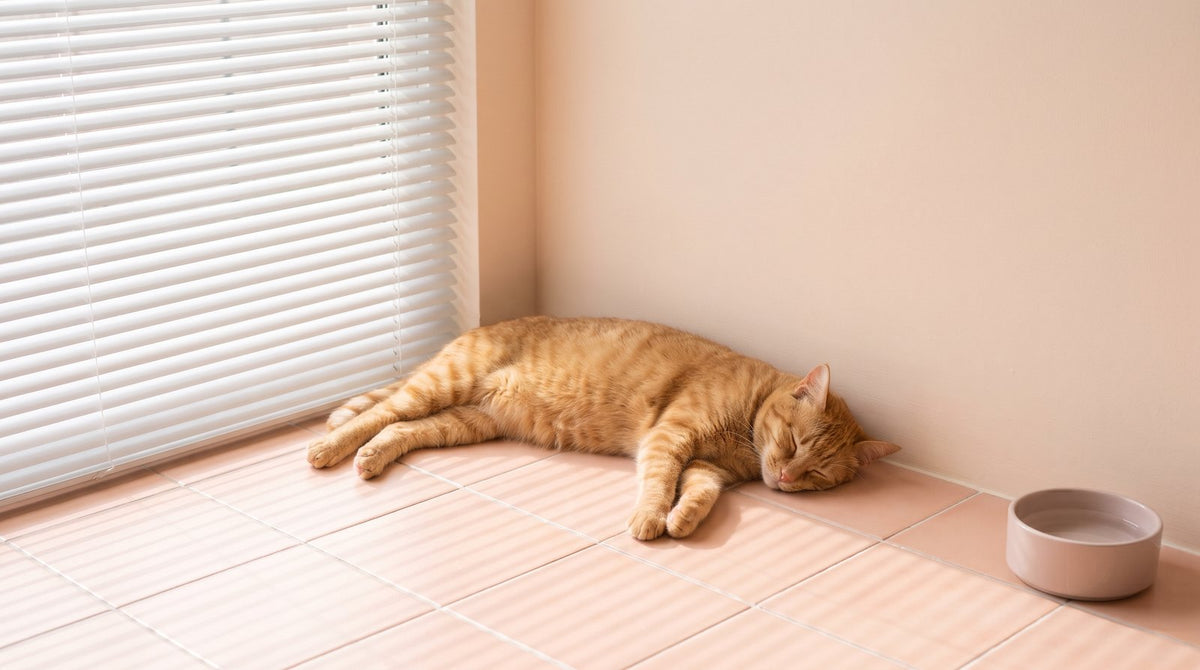
- Choose the coolest room in the house, usually on the ground floor, on the south or east side, with tiles or floorboards.
- Close blinds and curtains before the sun hits the windows.
- Run air-conditioning or a fan if you can.
- Put water, a litter tray and a comfortable cool spot in this room.
- Leave doors open so your cat can move between spaces and choose.
Safe ways to help your cat cool down
- Cool surfaces: tiles, a cooling mat, or a ceramic tile chilled in the fridge and laid in a favourite spot.
- A frozen water bottle wrapped in a tea towel, placed near (not under) their bed.
- A damp cloth gently stroked over the fur, which mimics grooming and helps evaporation.
- Moving air from a fan, pointed so your cat can move away from it if they want.
- Cardboard boxes in a shaded spot, which many cats love to hide in.
Water stations
Put water in at least three places, including the cool room. A fountain keeps water moving and fresh, and a cordless fountain keeps working even if the power goes out. Add ice cubes to bowls on very hot days, and refresh water morning and evening.
Food in the heat
Many cats eat less on hot days, which is normal in moderation. Serve smaller portions, feed in the cooler parts of the day, and do not leave wet food sitting out for long. Our guide to how long wet food can sit out covers the details.
Cats at higher risk
- Senior cats and kittens
- Flat-faced breeds such as Persians and Himalayans
- Long-haired cats
- Overweight cats
- Cats with heart, breathing or kidney conditions
Signs your cat is too hot
- Panting or open-mouth breathing
- Restlessness, then lethargy
- Drooling or excessive grooming
- Red gums or tongue
- Stumbling, vomiting or collapse
If you see these signs, move your cat somewhere cool, dampen their fur with cool (not cold) water, offer water, and call your vet straight away.
If you are out during the day
- Set the air-conditioning on a timer, or leave it running at a comfortable temperature.
- Close the blinds before you leave.
- Leave several water sources and a cool spot in every room your cat can access.
- Close off hot rooms such as sunrooms, attics and upstairs bedrooms.
- Ask a neighbour to check on your cat if a heatwave is forecast and you will be out for a long time.
Power outages
Summer storms and high demand can cause power cuts in a heatwave. Have a plan: know which room stays coolest without power, keep frozen water bottles in the freezer, and use battery-powered or cordless equipment where you can.
Apartment cats
Apartments can heat up quickly, especially upper floors with large windows. Keep windows secured with screens (cats can fall from balconies and windows), use blinds, and consider a portable air-conditioner for the hottest weeks.
A heatwave-day routine for indoor cats
- Early morning: open windows (with secure screens) to let cool air in, refresh all water, serve breakfast.
- Before 9 am: close windows and blinds on the sunny side to trap the cool air inside.
- Middle of the day: keep your cat in the cool room with water, a cooling spot and a litter tray. Check on them every few hours if you are home.
- Late afternoon: top up water, add ice cubes, and keep the house closed until the outside air is cooler than inside.
- Evening: open up again once it cools down, and serve dinner in the coolest part of the evening.
Grooming helps
A thick, matted coat traps heat. Brush your cat regularly in spring and summer to remove loose undercoat, especially long-haired cats. Many cats enjoy a gentle brush with a slightly damp hand or cloth on hot days, which also helps cooling through evaporation.
Older cats and heat
Senior cats often feel the heat more and may not move to a cooler spot on their own, especially if they have arthritis. Put water and a cool resting place close to where they already sleep, make sure they do not have to climb stairs to reach water, and check on them more often during a heatwave. If your older cat has kidney disease, heart disease or another condition, ask your vet for a heatwave plan before summer.
Frequently asked questions
What temperature is too hot for an indoor cat?
Many cats are comfortable in normal room temperatures, but once indoor temperatures climb into the 30s, especially with humidity, cats can struggle. Watch your cat rather than relying on a single number.
Should I shave my long-haired cat for summer?
Regular brushing to remove loose undercoat is usually enough. Some owners choose a lion cut for very long-haired cats, but talk to your vet or a cat groomer first.
Can I put ice in my cat's water?
Yes, a few ice cubes are fine and help keep water cool.
This guide is general information, not veterinary advice. If you're worried about your pet's health, please contact your vet.