Do Cooling Mats Work for Dogs and Cats? Gel vs Gel-Free Explained
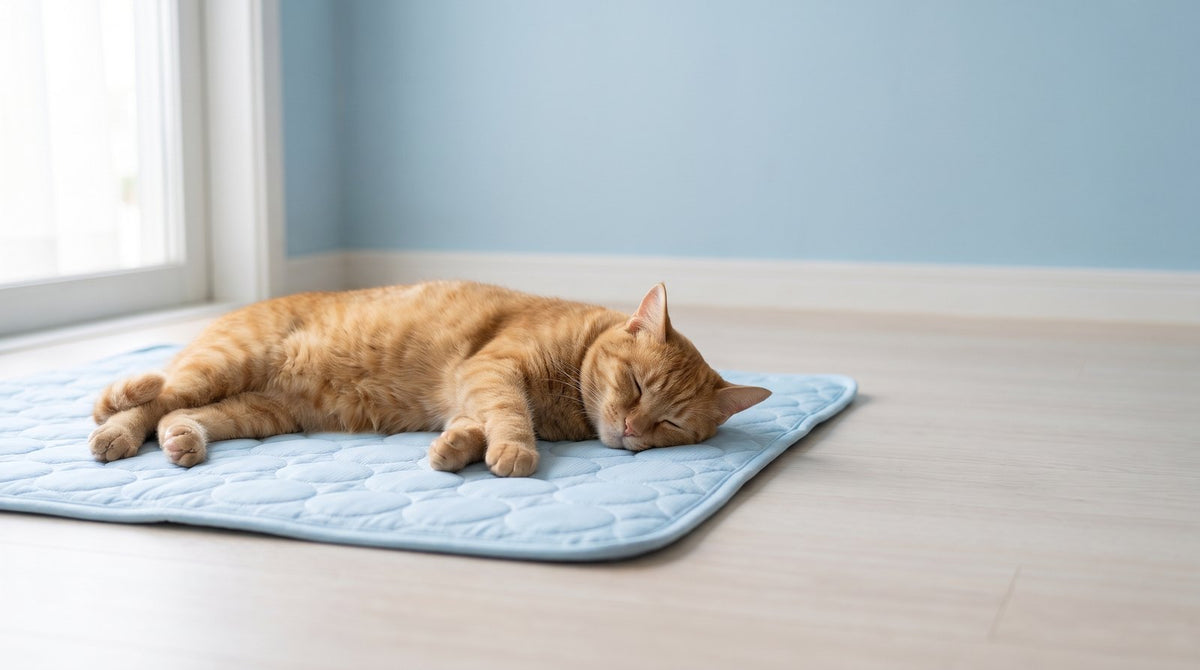
How pet cooling mats work, the real difference between gel and gel-free designs, and how to choose and use one well.
Cooling mats have become a summer staple for Australian pet owners. But do they actually help, and what is the difference between the many types on the market? Here is a straightforward explanation.
How do pet cooling mats work?
A cooling mat gives your pet a surface that stays cooler than the air or the floor around it. When your pet lies down, heat moves from their body into the cooler surface. Pets naturally do this already by stretching out on tiles or damp ground. A mat simply gives them a dedicated, comfortable spot to do it.
A cooling mat is a comfort aid, not a substitute for shade, water and a cool room. Used together, they make a real difference on hot days.
Gel mats vs gel-free mats
Pressure-activated gel mats
These contain a gel layer that absorbs heat when your pet lies on it, then releases it when they get up. They can feel noticeably cool to the touch, but they have some downsides:
- The gel can leak if a puppy or a determined chewer gets a tooth into it
- They can be heavy and are usually not machine washable
- They warm up after a while and need time off to recover
Gel-free fabric mats
Gel-free mats use cool-touch fabrics (often a smooth, ice-silk style top layer) that feel cool and stay breathable. They are:
- Safe if chewed, because there is no gel or liquid inside
- Light and easy to fold, so they move from the lounge to the car to the kennel
- Usually machine washable
- No fridge, power or water needed
Our Coolabah Cooling Mat is gel-free for exactly these reasons.
Choosing the right size
Measure your pet while they are lying stretched out, from nose to the base of the tail, and choose a mat a little longer than that. A mat that is too small means paws and hips hang off onto a warm floor. Our size guide matches common breeds to sizes S to XL.
How to get the most out of a cooling mat
- Put it in the shade. A mat in direct sun will heat up and lose its effect.
- Place it where your pet already rests. Pets choose their favourite spots, so start there.
- Put it on a cool surface like tiles or concrete rather than carpet.
- Introduce it with a treat or a favourite toy if your pet is unsure.
- Keep water close by.
- Wash it regularly to keep it fresh.
Do cats use cooling mats?
Many do, especially cats who already look for cool tiles or the bathroom floor in summer. Cats tend to be choosier, so put the mat in a spot they already like.
Cooling mats vs other ways to cool down
- Tiles and concrete: free and effective in the shade, but hard on older joints.
- Raised beds: let air flow underneath, which helps on humid days.
- Fans and air-conditioning: very effective indoors, but not available everywhere.
- Damp towels: help while they evaporate, but a wet towel left on a pet can trap heat. Lay it under your pet rather than over them.
- Cooling mats: portable, comfortable and easy to use anywhere, from the lounge to the car to the kennel.
The best results usually come from combining a few of these.
Where to use a cooling mat
- In your pet's favourite resting spot, in the shade
- In the crate or kennel on hot days
- In the car on road trips (never leave your pet in the car)
- After walks or play, to help them settle
- On holidays and at the caravan, where you might not have air-conditioning
What to look for when buying
- Chew safety: gel-free if you have a puppy or a chewer
- The right size: long enough for your pet to stretch out completely
- A non-slip base so it stays put on tiles and floorboards
- Machine washable covers or fabric
- Easy to fold if you want to take it in the car
Caring for your mat
Shake off hair daily and wash the mat regularly according to the care label. Let it dry fully before putting it back down. Store it folded somewhere dry over winter.
Are cooling mats worth it?
For most dogs and many cats, yes, especially in hot and humid parts of Australia, for pets who spend time home alone, and for flat-faced or thick-coated breeds. A mat is not a replacement for shade, water and a cool room, but it is an easy, low-cost way to give your pet one more cool option on a hot day.
Helping your pet use a cooling mat
Some pets take to a new mat straight away. Others are suspicious of anything new. To help:
- Put the mat in the spot your pet already chooses to rest on hot days.
- Lay a familiar blanket or toy on it for the first day or two.
- Reward your pet with a treat or praise when they step or lie on it.
- Be patient. Do not force them onto it.
- Once they are using it, you can move it to other spots, like the car or kennel.
Who benefits most from a cooling mat
- Flat-faced breeds such as pugs, French bulldogs and Persians, who struggle to cool down by panting
- Thick-coated dogs such as huskies, Samoyeds and golden retrievers
- Senior pets, who often spend more time lying down
- Pets home alone during the day
- Pets in humid areas such as Queensland and the Northern Territory, where panting is less effective
- Dogs recovering after exercise
Choosing between sizes
If your pet sits between two sizes, choose the larger one. A mat that is too small means paws, hips or tail rest on the warm floor, and many pets like to sprawl on hot days. For two pets who like to lie together, one large mat often works better than two small ones. Check our size guide for breed examples.
Keep reading
Frequently asked questions
Can I put a cooling mat in the fridge?
Gel-free mats do not need it. Some gel mats can be chilled, but check the manufacturer's instructions first.
Are cooling mats safe for puppies?
Gel-free mats are the safer choice for puppies and chewers, since there is nothing inside to leak. Supervise young pets with any new bedding.
How long does a cooling mat stay cool?
Gel-free fabric mats feel cool to the touch whenever your pet lies on them in a shaded spot. Gel mats tend to warm up after a period of use and need time off to recover.
Can my pet use it in winter?
It is best put away in cooler months, or used as a light mat in warm rooms.
This guide is general information, not veterinary advice. If you're worried about your pet's health, please contact your vet.