Fleas on Cats: Signs, Treatment and How to Stop Them Coming Back
Fleas are one of the most common problems Australian cat owners face, especially in warm weather. Here is how to spot them, treat them properly and stop the cycle for good.
Fleas love Australia's warm, humid months. Even strictly indoor cats can get them, because fleas hitch a ride on people, other pets and visitors. The good news is that fleas are very treatable once you understand how they live.
Signs your cat has fleas
- Scratching, especially around the neck, ears and base of the tail
- Over-grooming, sometimes leaving thin or bald patches
- Small scabs along the back and neck
- Restlessness or twitching skin
- Tiny dark specks in the coat or bedding (flea dirt)
- Seeing live fleas, small dark brown insects that move quickly through the fur
Cats are such good groomers that you often will not see live fleas at all, even when there are plenty in the house.
The wet paper towel test
Comb your cat over a white paper towel with a fine-toothed flea comb, especially along the back and near the tail. Tip any dark specks onto the damp towel. If they spread into reddish-brown smudges, that is flea dirt: digested blood. It is a reliable sign of fleas.
Why fleas keep coming back
The fleas you see on your cat are only a small part of the problem. Most of a flea population lives in your home as eggs, larvae and pupae, hidden in carpet, bedding, cracks in floorboards and soft furnishings.
- Eggs fall off your cat and land wherever they rest.
- Larvae hide away from light deep in carpets and bedding.
- Pupae sit in a protective cocoon and can wait for weeks or months, then hatch when they sense warmth, vibration or a passing pet.
- Adults jump onto your cat, feed and start laying eggs within a day or two.
This is why a single treatment rarely solves the problem. You need to break the life cycle by treating every pet consistently and cleaning the home at the same time, for long enough to catch the new fleas as they hatch.
How to treat fleas on your cat
- Use a product registered for cats. Your vet can recommend a spot-on, tablet or other treatment that suits your cat's age and weight.
- Treat every pet in the household, including dogs and other cats, with products made for each species.
- Keep treating monthly, or as directed, for at least three months. Many vets recommend year-round prevention in warmer parts of Australia.
- Check kittens with your vet first. Very young kittens need special care, and a heavy flea load can make them anaemic.
Never use dog products on cats
Many dog flea and tick products contain permethrin, which is highly toxic to cats. Even close contact with a recently treated dog can make a cat seriously ill. Signs include twitching, tremors, seizures, drooling and wobbliness. If you think your cat has been exposed, contact your vet immediately.
Essential oils, including tea tree oil, are also dangerous for cats and should not be used on them or in diffusers around them.
Treating your home
- Vacuum every day or two for a few weeks, including under furniture, along skirting boards and in the car. Empty the vacuum outside straight away.
- Wash bedding, blankets and throws in hot water and dry them on a hot setting.
- Do not forget your cat's favourite spots: windowsills, the back of the couch, cat trees and the car.
- Ask your vet about household flea products if the problem is severe, and follow the label carefully, especially around pets.
Vacuuming does more than remove eggs. The vibration encourages pupae to hatch, so the new adults meet your cat's flea treatment sooner.
Health problems fleas can cause
- Flea allergy dermatitis: some cats are allergic to flea saliva, and a single bite can cause intense itching and scabs.
- Tapeworm: cats can pick up a type of tapeworm by swallowing fleas while grooming. You may see small rice-like segments near the tail.
- Anaemia: heavy infestations can be serious for kittens and small, elderly or unwell cats.
If your cat has a skin problem that does not clear up, or seems unwell, see your vet.
Preventing fleas long term
- Keep every pet on a regular, vet-recommended flea preventative.
- Set a monthly reminder on your phone so treatments are never late.
- Vacuum regularly and wash pet bedding every week or two.
- Check your cat with a flea comb every week or so in warm months.
- Treat new pets before they join the household.
Homes with cats and dogs
If you share your home with both, flea control works best when everyone is treated, but always with the right product for each species. Keep dog products well away from cats, let spot-on treatments dry before dogs and cats cuddle up, and store products separately and clearly labelled. Our dog flea and tick range, including the spray and shampoo, is made for dogs only and is not suitable for cats.
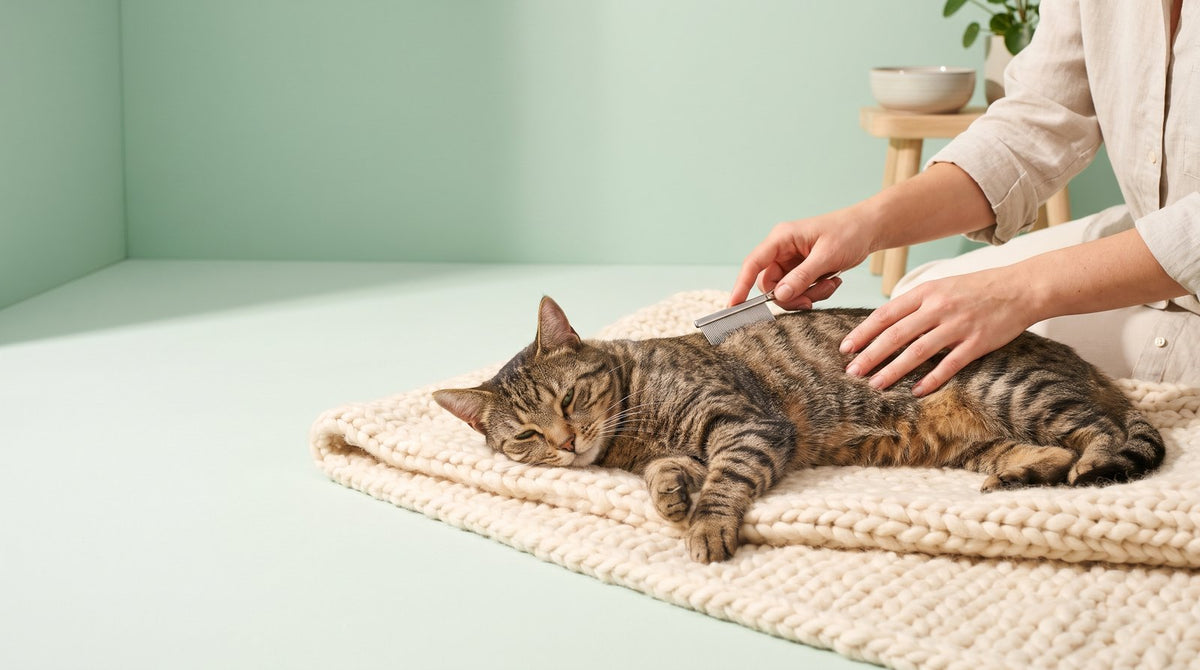
How to use a flea comb properly
A fine-toothed metal flea comb is one of the cheapest and most useful tools you can own. Comb your cat once a week in warm months, or daily during an infestation:
- Choose a calm moment, such as after a meal, and sit your cat on a light-coloured towel.
- Comb slowly from the head to the tail, paying attention to the neck, the base of the tail and the belly.
- Wipe the comb on a damp paper towel after every few strokes and check for fleas or flea dirt.
- Drop any live fleas into a cup of soapy water.
- Reward your cat with a treat so combing becomes a pleasant routine.
Frequently asked questions
Can indoor cats get fleas?
Yes. Fleas can come in on clothing, shoes, other pets or visitors, and from the yard.
How long does it take to get rid of fleas?
Usually at least three months of consistent treatment and cleaning, because of the flea life cycle. You may still see the odd flea in the first few weeks as pupae hatch.
Can fleas live on people?
Cat fleas may bite people, usually around the ankles, but they do not live on humans long term.
Are flea collars safe for cats?
Only use products made and registered for cats, and fit collars with a quick-release clasp. Ask your vet which options suit your cat.
This guide is general information, not veterinary advice. If you're worried about your pet's health, please contact your vet.